
Semiconductor manufacturing leaves no room for error. Production begins with ultra-pure process gases (dopants, etchants, and carriers) that must be delivered in exact concentrations to support reliable device fabrication. Yet, even when gases meet exceptional purity standards, the systems that mix, dilute, and calibrate them can introduce risk. A microscopic leak, a slight miscalibration, or trace-level contamination may disrupt deposition, doping, or etching steps, ultimately degrading device performance or reducing yield. To prevent such outcomes, ultra-high purity (UHP) calibration systems safeguard gas integrity from start to finish, ensuring the purity, accuracy, and consistency needed for defect-free semiconductor production. Their role is critical yet subtle, providing a layer of control that upholds the reliability of every device built.
Why Semiconductors Rely on UHP Calibration Systems
Manufacturing semiconductors demands extreme control over chemical inputs down to the parts-per-billion. Process gases must not only be pure, but precisely measured and constantly delivered. However, the challenge does not end with purity; errors introduced during blending, dilution, or delivery can still cause subtle shifts in process behavior. Small fluctuations in gas concentration or composition can result in measurable defects at the wafer level, particularly in advanced semiconductor devices such as logic and memory chips, where feature sizes have continued to shrink.
UHP calibration systems are essential to semiconductor production as they mitigate sources of contamination, precisely regulate gas concentrations, and ensure every calibration is traceable and repeatable. These capabilities are crucial for preventing gas-related defects that can compromise transistor performance, circuit reliability, or overall device yield. Without the stability provided by UHP calibration systems, fabs risk issues like inaccurate dosing, cross-contamination between gas runs, or untraceable variability across tools and production batches.
The Role of UHP Calibration Systems in Keeping Defect-Free Semiconductors
Ensuring Accurate Gas Concentrations for Sensitive Processes
Semiconductors are built with nanometer- and even near-atomic-scale-features, so gas calibration must be exact to keep manufacturing free of defects. UHP calibration systems achieve the required precision through mass flow controllers calibrated against national standards, capable of producing mixtures ranging from percent concentrations to parts-per-billion with high repeatability. Such a level of precision avoids the risk of inconsistent doping profiles, gate thresholds shifts, or critical dimension variation that might otherwise occur during lithography or implantation. In doing so, UHP calibration systems provide the stability and control needed for consistent, high-yield semiconductor production.
Blocking Contaminants That Cause Oxide Growth and Electrical Failure
UHP calibration systems are engineered to stop ambient air from entering the gas stream, a crucial step in preventing defects in semiconductor devices. Welded stainless steel assemblies, electropolished surfaces, and all-metal seals reduce leak paths and remove elastomer permeation and outgassing within the system. When ambient air enters the gas stream, trace amounts of oxygen or moisture can cause unintended oxidation or dielectric degradation at the wafer level. By maintaining a sealed, contamination-resistant environment, UHP calibration systems preserve gas purity and reduce the risk of defects during the most sensitive stages of semiconductor processing.
Eliminating Residual Gas Interference Between Calibrations
Transitions between gas blends are a hidden source of contamination unless managed carefully. UHP calibration systems employ automated purge cycles that flood the lines with ultra-pure inert gas, clearing away the remnants of earlier mixtures. If not removed, lingering molecules can combine with new gases to form particles or trigger reactions that undermine wafer processing. In highly sensitive steps such as atomic layer deposition (ALD) and chemical vapor deposition (CVD), controlled transitions keep gas streams clean, protect wafer integrity, and help semiconductors move through production and avoid quality losses.
Detecting Sub-Visible Contamination Before It Reaches the Wafer
Not all threats to device integrity are visible or even measurable without advanced instrumentation. Gas analyzers capable of detecting contaminants at parts-per-trillion levels, such as moisture, oxygen, and volatile organics, are often integrated alongside UHP calibration systems to monitor purity in real time. Identifying these impurities before they enter the process line prevents damage to gate oxides, reduces the risk of unwanted chemical reactions, and keeps semiconductor wafers on track for defect-free manufacturing.
Preventing Process Drift That Leads to Random Defects
Fluctuations in gas delivery can quietly introduce variability that can escape detection until wafer yields begin to fall. UHP calibration systems prevent this outcome through maintaining stable flow rates, pressures, and gas compositions during each cycle. A consistent process environment across tools, shifts, and lots allows wafers to be processed under uniform conditions. With that stability in place, semiconductors can be manufactured with fewer risks of defects such as uneven doping, etch depth variation, or film thickness inconsistencies, supporting the defect-free standards required at advanced nodes.
Reducing Semiconductor Issues with UHP Calibration Systems
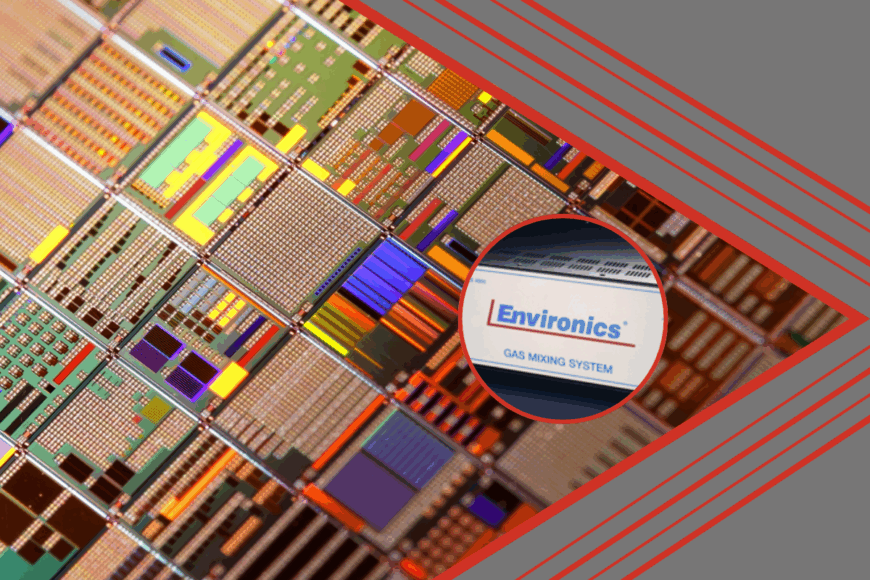
The precision and cleanliness required in semiconductor manufacturing demand UHP calibration systems that maintain gas purity, regulate concentrations with accuracy, and document every calibration with full traceability. Environics’ Series 4000UHP Gas Mixing System and Series 4040UHP Gas Dilution System are specifically engineered for the ultra-high purity demands of semiconductor production, delivering precise, contamination-free gas mixtures that support consistent, high-quality manufacturing. Built with all-metal seal mass flow controllers, orbitally welded stainless steel hardware, and NIST-traceable calibration, they provide stable and accurate gas delivery with minimal risk of contamination. Reach out to us now to find out more about our UHP calibration systems.